The contract you sign in September decides how January goes.
Commercial and residential snow removal in Mystic CT and across southeastern Connecticut. Plowing, walkways and ice management, on a written scope agreed before the first flake.
Got it.
Your request is in. Someone will reach out within one business day. Need us sooner? Call (860) 980-1129.
By December you are not choosing a contractor. You are taking whoever is left.
Snow routes are capped for a reason. A truck can only cover so many properties inside a response window that still means anything, so any crew worth signing stops taking accounts once the route is full. That happens in the fall.
Which is why the calls we cannot help with all arrive the same week. Mid December, the forecast has turned, and last year’s vendor has stopped answering. By then every route in the county is spoken for.
Book the walk now and the scope gets written while there is still time to argue about it. Ask for the site walk here.
Six things a snow contract has to name.
If a quote does not spell these out, it is not a scope, it is a number. Ours are written down before the season starts, so nobody is deciding anything at four in the morning.
Plowing to a named trigger
The accumulation depth that puts us on your property, agreed in writing. Commercial sites usually sit at a lower trigger than driveways because the doors open earlier. Yours gets set on the site walk, not assumed.
Every surface listed by name
Drive lanes, parking stalls, fire lanes, sidewalks, ADA ramps, entry aprons, dumpster pads. If a surface is not on the list it does not get cleared, which is exactly why the list is worth reading before you sign it.
Walkways cleared by hand
Sidewalks, steps and entrances are done on foot, not by pushing snow past them. This is the part that gets skipped when a crew is behind, and it is also the part that people actually walk on.
Salting, and when it happens
Whether de-icing is included in the rate or billed per application, and which surfaces it covers. Vague salting terms are the single most common source of an invoice argument in February.
The refreeze pass
The most skipped step in the trade. Melt runs across a lot all afternoon and freezes at dusk, so shaded corners and north-facing walks need a look after the storm has cleared. The snow was never the dangerous part.
A record of the visit
For commercial sites, what was done and when. If a slip claim lands on your desk in March, the question will not be whether it snowed. It will be whether you can show what you did about it.
Three contract structures, and the one that suits you is not always ours to prefer.
Every snow quote in Connecticut is one of these three. Knowing which one you are reading is most of the battle, because the same property can look cheap or expensive depending only on how the winter turns out.
Same trucks. Genuinely different job.
We run both, and beyond the plow they have very little in common. What changes is the trigger, the clock, and what happens if it goes wrong.
Commercial: the clock is the product
A lot has to be open before the first employee arrives, so the crew works while the storm is still going rather than waiting for it to finish. Lower trigger depth, repeat passes, and sidewalks handled as their own job. Commercial runs across the state, not just the shoreline.
Commercial: liability is the real spend
Slip and fall claims here turn on ice management far more often than on snow depth. A cleared lot with a glazed walkway is a worse position than an unplowed one, because it looks handled. So walkways, de-icing and the refreeze pass are named items in the scope, not assumptions.
Residential: getting out, on time
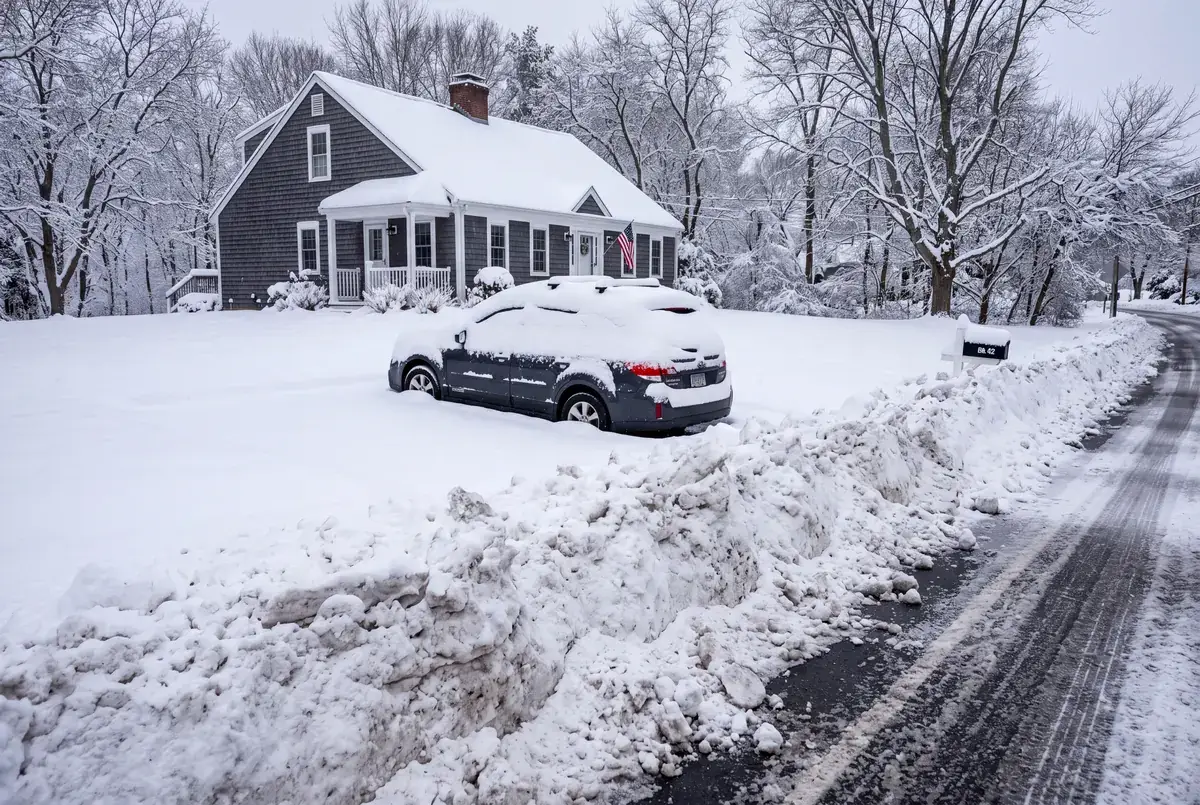
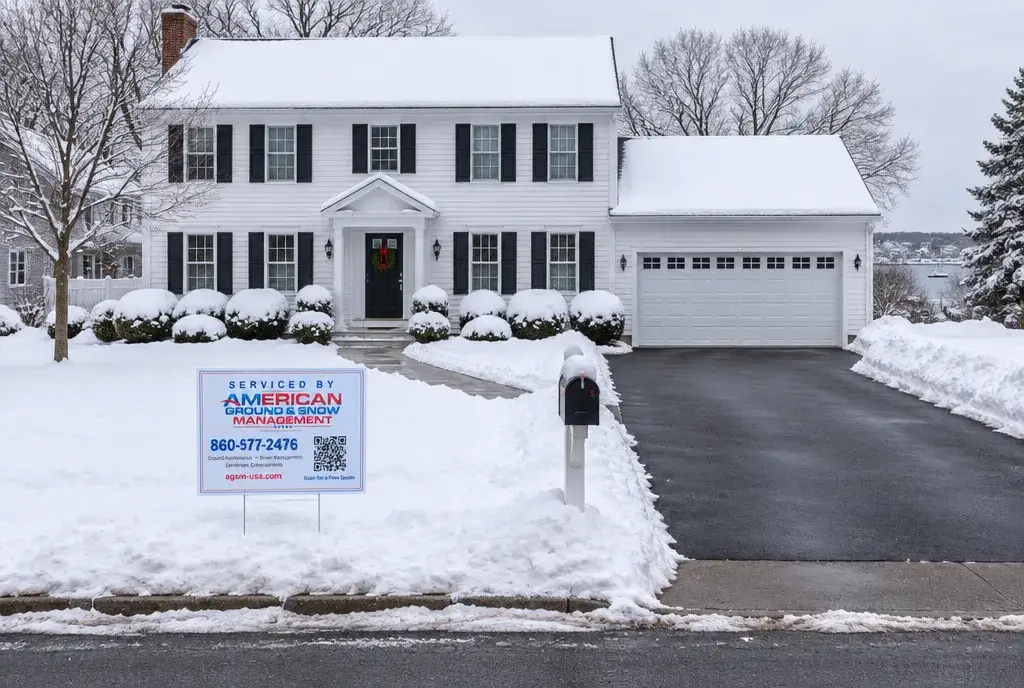
Driveway to bare pavement, the apron cleared after the town plow buries it again, and the walk to the door done by hand. Higher trigger depth than a commercial site, because nobody needs a driveway plowed at an inch.
Both: the route is why it works
We keep accounts clustered inside New London County so no property is the last stop forty five minutes away. Route density is the least glamorous thing in this trade and the only one that predicts whether your site gets cleared on time. Ask any contractor how many properties one truck covers.
Both: the same company in July
The crew that clears your driveway in January is the crew that mows it in July, so they already know where the curb line is under the snow. That is how lawns and sprinkler heads survive the winter. See lawn care and the fall cleanup that comes before the first snow.
Two ways to buy a winter.
Flat seasonal pricing for a driveway, so the whole winter is one number decided in October rather than a run of invoices you cannot forecast. Both cover unlimited visits, however many storms turn up.
Essential Snow
by November 1
or $2,500 across five monthly installments, November to March.
- Unlimited visits, however many storms come
- Driveway plowed
- Walkway to the front door shoveled by hand
- Salt applied after plowing
- Driveway staked before the season
- Cleared within 8 hours of the storm ending
Premium Snow AM
by November 1
or $1,000 a month across five monthly installments, November to March.
- Everything in Essential Snow
- One guaranteed plow before 7am
- Your driveway is cleared before the route runs
- Capped at five properties per route, so the guarantee is deliverable
- Booked first come, and it does sell out
Nothing decided at four in the morning.
Everything that matters is agreed in daylight, in September, in writing. Trigger depth, every surface by name, whether salting is in the rate, and what happens on a storm that runs two days. Nothing is improvised mid storm and nothing lands on an invoice that was not in the scope.
Get on the route before it closes.
We walk the site, map the surfaces, mark where the snow gets stacked, and write the scope around it. Then you decide in September rather than at six in the morning in January. Routes are capped, and they fill from the fall.
Free site walk · written scope · certificate of insurance before any work starts
Straight answers about snow removal in Mystic CT.
When do I need to book?
Before the route fills, which means fall. Commercial sites should be scoped by early October, since the site walk and surface map take longer than people expect. Driveways can go later, but not much.
Residential, or only commercial?
Both. Commercial runs across the state, residential is centred on New London County, on the same route the mowing runs on.
What depth brings you out?
It is written into your contract rather than fixed for everyone, because a medical office and a private driveway do not want the same answer. We set yours on the site walk.
Is salting included?
It is a line in the scope, either built into the rate or billed per application, naming which surfaces it covers. Vague salting terms cause more February invoice arguments than anything else.
What about the pile the town plow leaves?
The apron gets cleared. It is the most annoying part of a Connecticut winter and it decides whether you actually get out, so it is in the scope rather than treated as extra.
Are you insured for commercial work?
Yes, licensed and insured, CT HIC #0704425. A certificate goes over before any work begins, every time, and you do not have to chase it.

What does it cost?
No list price. It runs on square footage, how many surfaces need clearing, where the snow can physically be stacked, and which of the three structures you pick. We walk the site and quote it free.
More on winter and commercial property.
What a Connecticut winter actually does to a property, and what a real contract covers.

Commercial Grounds Maintenance in Connecticut: What Full-Service Contracts Actually Cover
Commercial grounds maintenance Connecticut properties need year-round. See what a full-service contract covers and why HOAs pick one vendor.

What to Expect From Commercial Snow Removal in Connecticut
Commercial snow removal Connecticut: response times, salting, ice management, and how CT property managers keep their sites safe all winter long.