If you want a thicker, greener yard next spring, lawn aeration and overseeding done this fall is the single biggest lever you have. Around here in southeastern Connecticut, September into mid-October is the sweet spot, and skipping it is how thin, patchy lawns stay thin and patchy year after year.
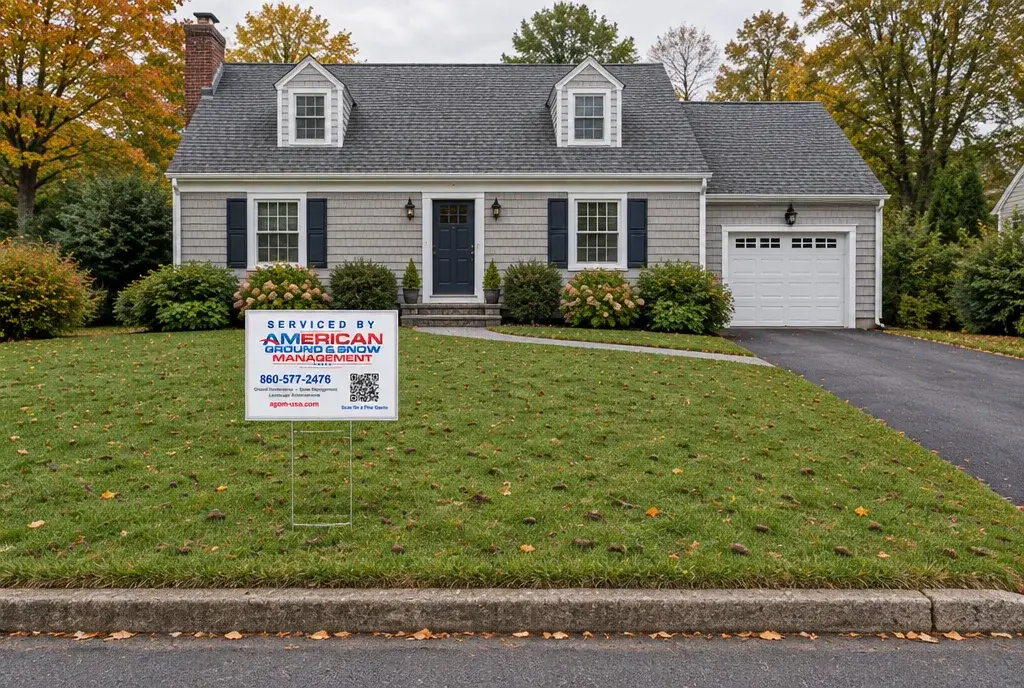
We are American Ground & Snow Management, family-owned in Mystic since 2022, CT HIC #0704425, licensed and insured, and 2025 Best of Eastern Connecticut winner. We run lawn renovation across Groton, Mystic, Stonington, Ledyard, Pawcatuck, Norwich, and the rest of New London County every fall, so this is a topic we get asked about constantly. Here is the plain-English version of what it is, why the timing matters, and what to do after it is done.
Why fall beats spring for lawn aeration and overseeding
Cool-season grasses like tall fescue, Kentucky bluegrass, and perennial ryegrass are what most southeastern CT lawns are built from. These grasses hate July. They love September. Three things line up in fall that never line up in spring.
- The soil is still warm. After a full summer of sun, our soil is holding heat into October. Warm soil germinates seed fast, usually seven to fourteen days.
- The air is cool. Cool air means less stress on baby grass. Seedlings do not fry in an afternoon heat wave the way they do in May.
- Weed pressure drops off a cliff. Crabgrass and most summer annuals are done for the year by early September. Your new grass gets to grow without fighting for space, water, and light.
Spring seeding technically works, but you are racing summer heat, and any pre-emergent weed control you put down in April cancels out the seed. Fall gives you a clean runway.
What core aeration actually is (and why spiking is not the same)
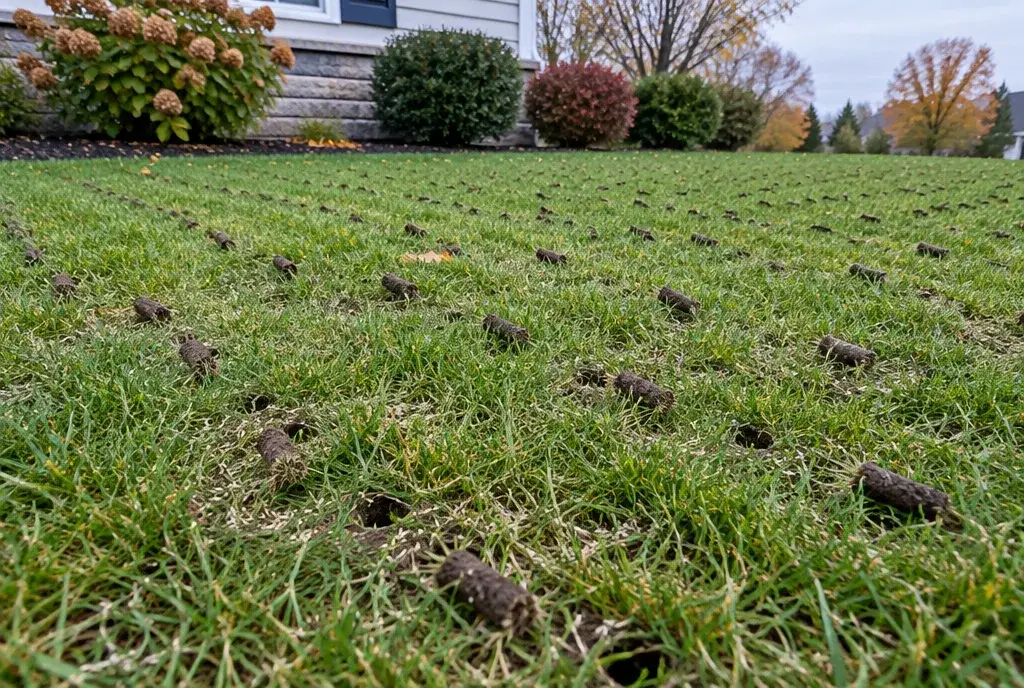
Core aeration is when a machine pulls thousands of small plugs of soil out of your lawn, usually two to three inches deep and about the diameter of a finger. Those plugs get left on the surface to break down over the next couple of weeks. What you are left with is a lawn with thousands of little holes in it.
Those holes are the whole point. They let air, water, and nutrients get down to the root zone instead of running off the top of compacted soil. When you overseed right after, the seed falls into those holes and lands in perfect soil-to-seed contact. That is how you get germination rates that actually put grass in your lawn instead of feeding the birds.
Spike aeration, where a machine or a pair of shoes just pokes holes in the ground, does the opposite of what you want. It compresses the soil around each hole and makes compaction worse. If someone offers to aerate your lawn with a spike attachment, that is not aeration, that is punching holes in a drum. You want a core aerator that pulls plugs.
How to tell if your lawn is compacted or thin
You do not need a soil test to see the signs. A few honest checks:
- The screwdriver test. Push a long screwdriver into your lawn after a rain. If it goes in six inches easily, your soil is fine. If it stops at two inches or you have to lean on it, you are compacted.
- Water pools or runs off. Rainwater should soak in. If you have puddles or your yard sends water down the driveway, the soil is not accepting it.
- Thin, patchy areas, especially in high-traffic lanes. Between the driveway and the front door, along the fence where the dog runs, under the swing set. Foot traffic and pet traffic are the number one causes of compacted residential lawns.
- Moss, or a lot of weeds outcompeting the grass. Both love compacted, low-oxygen soil.
- Thatch over half an inch thick. That spongy brown layer between the green blades and the soil. A little is fine. A lot suffocates the lawn.
If two or more of those describe your yard, this is a fall to aerate and overseed, not a fall to skip.
The right seed for southeastern Connecticut
This is not the place to buy the cheapest bag at the box store. Our climate wants a blend of turf-type tall fescue for durability and drought tolerance, Kentucky bluegrass for that dense, self-repairing carpet look, and a small percentage of perennial ryegrass for fast germination and quick cover. A quality contractor blend from a real seed supplier germinates faster, fills in denser, and holds up to New England winters way better than a generic “Northeast Mix” from a shelf.
Shady areas need a different mix, usually heavier on fine fescues. If half your yard is under maples and oaks, the same blend is not going to work everywhere. According to the University of Arizona Cooperative Extension turfgrass guidance, matching cultivar to site conditions is one of the biggest predictors of overseeding success, and that is just as true for our cool-season lawns in Connecticut.
What to do after aeration and overseeding: the two weeks that decide everything
Getting the aeration and overseeding done is maybe 60 percent of the job. The next fourteen days decide whether you actually get a lawn out of it. Here is the honest homeowner playbook.
Water like you mean it
Seed cannot dry out during germination. Not for a full day, not for half a day. For the first ten to fourteen days, that means light watering two or three times a day, just enough to keep the top half inch of soil damp. Not soaked. Damp. Once the seed is up and you can see a green fuzz across the yard, back off to longer, deeper watering less often. That trains the roots to chase water down instead of staying at the surface.
If we get a cool rainy stretch, nature does the work for you. If it is dry and windy, you are on the hose. This is the part homeowners quit on, and it is the reason “we tried overseeding once and it didn’t work.”
Raise the mower and leave it high
Do not scalp your new lawn. Set the mower deck to at least three inches, preferably three and a half. Taller grass shades the soil, holds moisture, and outcompetes weeds. Do not mow at all until the new grass hits about four inches, and when you do, take off no more than a third of the blade at a time.
Handle the leaves, do not let them sit
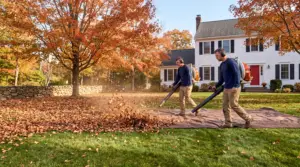
By mid-October the leaves are coming down. A thick mat of wet leaves on a young lawn will kill it inside a week. You do not have to be obsessive, but you do have to keep the leaf load light. Mulching them into small pieces with the mower is fine and actually adds organic matter back to the soil. Piling them up and leaving them for three weeks is not fine.
Skip the herbicide until spring
No weed and feed, no crabgrass pre-emergent, no broadleaf spray on newly seeded areas. Most weed control products stop grass seed from germinating too. Wait until the new lawn has been mowed at least three times before applying anything. That usually pushes you into next spring.
Why doing this every fall compounds
Here is the part most people miss. A lawn aerated and overseeded once looks noticeably better next spring. A lawn aerated and overseeded three years in a row looks like a different yard entirely. Each fall builds on the last:
- Year one, you break up compaction and fill in the worst thin spots.
- Year two, the new grass from year one is now mature and spreading, and you fill in the next round of weak areas.
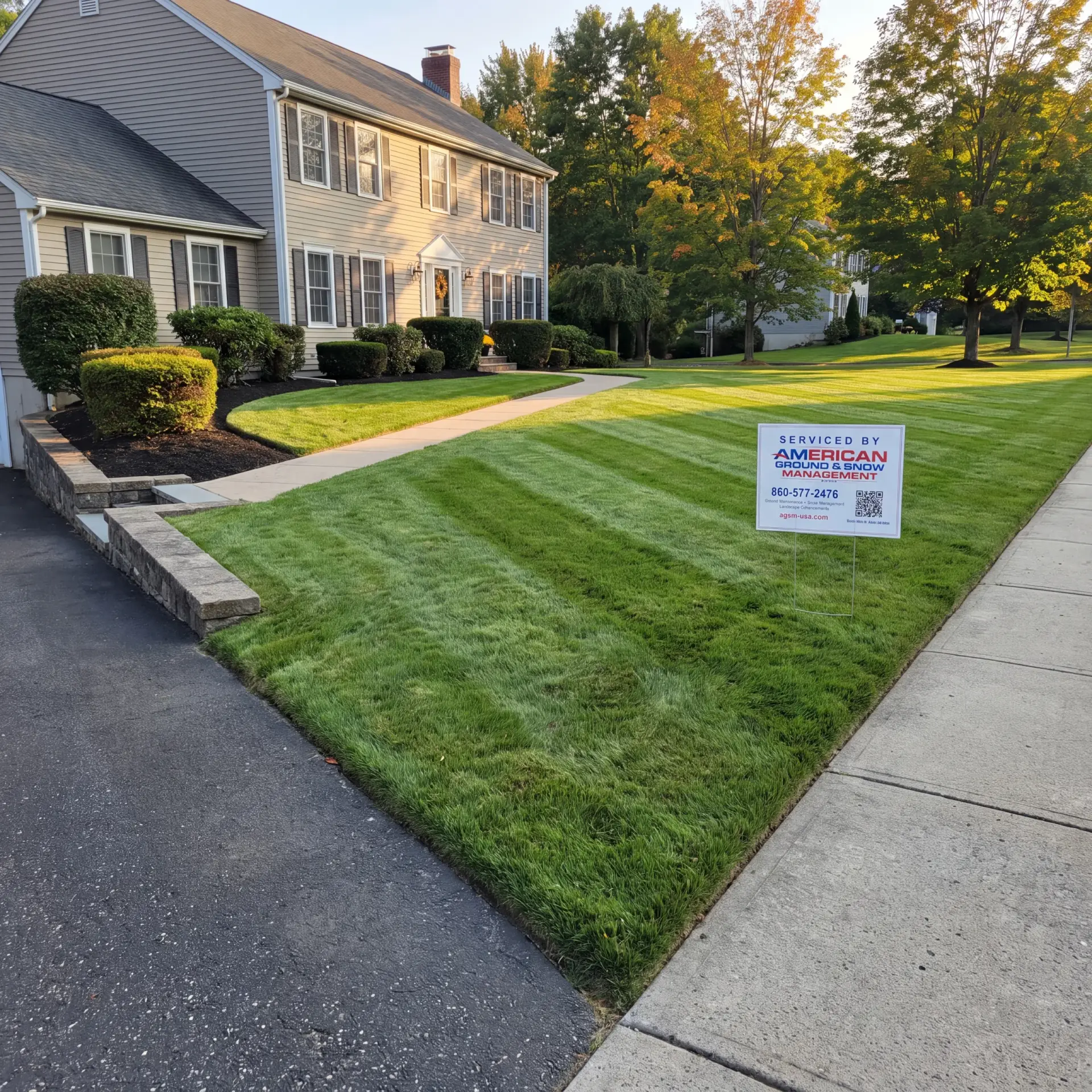
- Year three, your lawn is dense enough that weeds cannot get a foothold, water soaks in evenly, and you are mowing thick green turf instead of green and brown patches.
If you are wondering how we got to be the crew that shows up when we say we will, some of that is on our about page. Aeration is one piece of a full season of lawn care.
Should you DIY or hire it out?
Honest answer. If you have a small flat yard, a decent core aerator rental is available at most equipment yards for a Saturday, and a homeowner can pull this off. The problems most people run into are: the rental machine is worn out and does not pull deep plugs, the seed is bought too cheap and germinates poorly, the watering plan falls apart by day four, or the lawn is bigger and more sloped than the rental machine was designed for.
A professional aeration and overseeding service uses commercial-grade equipment that pulls consistent plugs, uses contractor-grade seed blends built for our region, and can typically knock out a half-acre lawn in an hour or two that would take a homeowner most of a weekend. If you have compacted clay, a lot of thatch, or you have been fighting the same thin patches for three summers in a row, professional is usually the right call.
Either way, get it done this fall. Every October you skip is a spring next year that starts from behind.
Ready to book your fall aeration and overseeding?
We handle lawn aeration and overseeding across all of New London County, with residential service in Groton, Mystic, Stonington, Ledyard, Pawcatuck, Niantic, Gales Ferry, Norwich, and the surrounding towns. Free on-site quotes, no pressure, and we will tell you honestly whether your lawn needs a full renovation or just a targeted overseed on the thin spots.
Call or text American Ground & Snow Management at (860) 980-1129 to get on the fall schedule before the window closes. Family-owned, CT HIC #0704425, licensed and insured, and out on your lawn the same crew every visit.