
Most winter advice assumes you have a driveway. A truck comes, pushes the snow to one end of it, and leaves. That describes almost nothing in the middle of Mystic. Snow removal in downtown Mystic is hand work on a tight lot, and it is planned rather than reacted to.
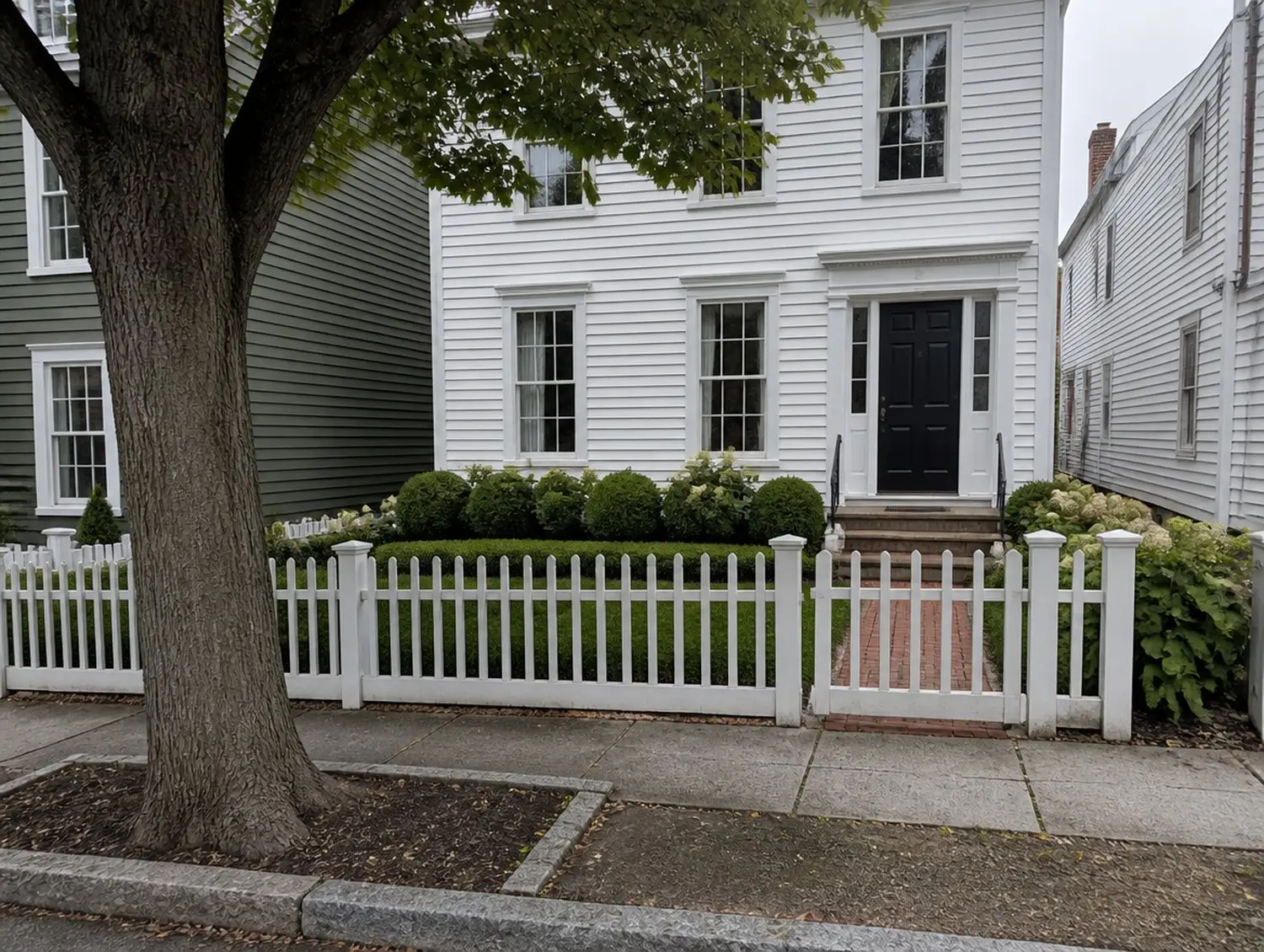
On a historic district lot the house often sits close to the street, there is no driveway at all, parking is on the road, and the ground you actually need cleared is a short brick or bluestone walk and a set of steps. That is a hand job, not a plow job, and it needs deciding in October rather than at six in the morning after the first storm.
Snow removal in downtown Mystic starts with where it goes
This is the part nobody plans. On a tight lot with fifteen feet of front garden, a picket fence and a sidewalk you are not allowed to block, there are only so many places to put it. Get it wrong and you spend the winter moving the same snow twice.
Three things worth working out before it snows. Which corner of the garden can take a pile without burying a shrub you care about. Whether the town clears your stretch of sidewalk or you do, which is worth checking with Groton or Stonington depending on your side. And what happens when the plow comes down the street and puts a bank across the end of your walk, because on a street-parked property that bank is the thing between you and your car.
Salt on old masonry is not free
Downtown Mystic has a lot of old brick walks, bluestone, granite steps and mortared stone. Rock salt is hard on all of it, and freeze and thaw does the rest. Water gets into the surface, freezes, expands and lifts a face off the brick. On a hundred year old walk that damage does not come back.
A few practical things help. Clear mechanically first and salt second, so you are treating a thin film rather than melting a whole storm. Use less than feels right. And keep de-icer off newly repointed mortar entirely for its first winter.
It is also an argument for pavers over poured concrete on anything being rebuilt. A paver surface flexes with frost and a settled section can be lifted and reset. A cracked slab is a permanent, visible repair. That is covered on the walkways and steps page.
Prep the plants before the ground freezes
Anything within a shovel’s throw of a walk is going to take salt. On a small downtown garden that is most of it. A burlap screen on the shrubs nearest the path is unglamorous and works. Boxwood, which is on half the front gardens in the village, holds up reasonably well but resents having salty snow piled against it all winter.
The other job is a proper fall cleanup. Leaves left on a small lawn under snow mat down into a wet grey layer, and what comes out in March is snow mould on the one patch of grass you have. On a large property that is an annoyance. On a fifteen foot front garden it is the whole garden.
Access is the thing to sort in advance
The constraint that shapes everything downtown is that nothing wide gets in. No driveway, no side gate a machine fits through, and a sidewalk that has to stay clear. It means the work is done on foot with barrows, which is slower and needs planning, and it means anybody quoting a downtown property should have walked it rather than looked at it on a map.
It also means booking early genuinely matters. Hand-cleared properties take crew time rather than truck time, and there is only so much of it in a storm. Routes for the season get set in the autumn.
If you own something in the historic district, the useful move is to have somebody walk it in daylight in October and agree where the snow goes, what gets salted and what does not, and who is doing the sidewalk. See snow and ice management, or year-round care in Mystic.