




The best lawn care schedule for southeastern Connecticut is built around two windows: spring, when you stop crabgrass and wake the lawn up, and late summer into fall, when you aerate, seed and clean up. Everything else is steady mowing at the right height. This is the calendar our crews follow on lawns across Mystic, Groton, Stonington and the rest of New London County.
The short version
- March to April: spring cleanup, rake out matted grass, crabgrass pre-emergent when the forsythia blooms.
- May to June: weekly mowing at about 3 inches, never cutting more than a third of the blade.
- July to early August: mow high, water deep and less often, stay off a stressed lawn.
- Late August to September: core aeration and overseeding. The most important work of the year.
- October to November: keep mowing, keep leaves off the grass, fall cleanup, last mow a little shorter.
- December to February: no phosphorus fertilizer by state law, keep salt and plow piles off the turf.
March and April: cleanup and crabgrass timing
Once the snow is gone and the ground firms up, the lawn needs to breathe. Rake out leaves the fall missed, sticks, sand and salt along the driveway and road edges, and any matted patches where snow sat all winter. Walking or driving on soggy ground in March compacts the soil, so wait until it no longer squishes underfoot.
Crabgrass is the big decision in spring. The Connecticut Agricultural Experiment Station times pre-emergent control to when forsythia is in full bloom, or when the top inch of soil holds around 55°F for four to five days. That is when crabgrass seed starts to germinate. One catch: most pre-emergent products also stop grass seed from coming up, so you either control crabgrass in spring or seed in spring, rarely both. That is one more reason the real seeding happens in fall.
A spring cleanup covers the raking, bed edging and debris haul in one visit.
May and June: mow often, mow high
This is peak growth. Cool-season grasses, the bluegrass, ryegrass and fescue blends that make up nearly every lawn here, can put on two inches in a wet week. Keep the mower at about 3 inches and cut often enough that you never take more than a third of the blade at once. Taller grass shades the soil, which keeps weed seeds from sprouting and holds moisture longer.
Sharp blades matter more than people think. A dull blade tears the tip and leaves the whole lawn looking brown a day later. Leave the clippings on the lawn. They break down fast and feed the soil.
This is where a weekly mowing schedule earns its keep. Miss one week in late May and the next cut takes half the blade.
July and early August: let the lawn coast
Cool-season lawns slow down in summer heat, and some brown out in a dry stretch. That is dormancy, not death. Mow on the high side, water deeply about once or twice a week in the early morning instead of a little every evening, and keep heavy traffic off a stressed lawn.
Use this time to look. Thin areas, bare spots, places that stay wet after rain and spots where water runs off are your list for fall. Standing water is usually a drainage problem, not a grass problem, and seed will not fix it.
Late August through September: aerate and overseed
If you only do one thing beyond mowing, do this. Soil is still warm from summer, nights are cooling off, and most weeds are winding down. New grass seed comes up fast and has two months to root before frost.
Core aeration pulls plugs of soil out of the lawn, which opens up compacted ground so water, air and seed get to the roots. Overseeding right after puts seed into those holes, where it has soil contact and protection. Keep the seed moist with light daily watering for the first few weeks, then back off as it fills in. We go deeper on this in our post on lawn aeration and overseeding in southeastern CT.
For a lawn that is mostly weeds, bare dirt or grade problems, a full renovation with seed or sod makes more sense than overseeding. See lawn installation.
October and November: leaves and the last mow
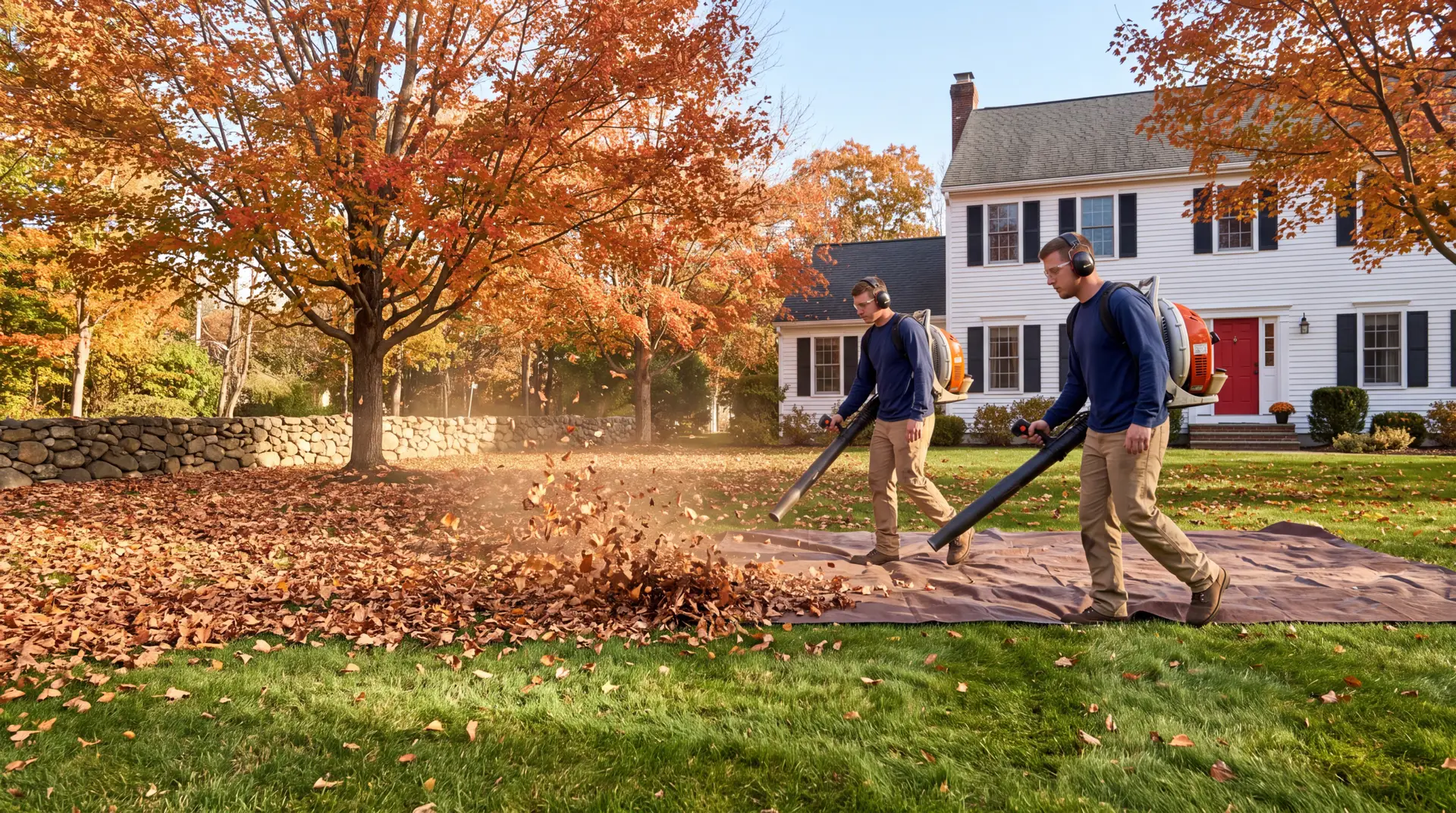
Keep mowing until the grass stops growing, which in most of New London County runs into November. Leaves are the real enemy this time of year. A layer left on the lawn for a couple of weeks blocks light, holds moisture against the grass and sets up snow mold over the winter. Mulch light leaf cover with the mower. Remove anything heavier.
Drop the mower a notch for the last cut or two, closer to 2.5 inches, so the grass does not lay over and mat under snow. A fall cleanup handles the final leaf removal, bed cutback and debris haul before the ground freezes.
December through February: protect what you built
Connecticut law does not allow phosphorus fertilizer on established lawns from December 1 through March 15, or within 20 feet of a stream, pond or the Sound. That rule comes from Public Act 12-155, and UConn’s soil testing lab explains it in plain terms. Feeding a frozen lawn does nothing anyway.
Winter damage here is mostly salt and plowing. Road salt and de-icer burn the grass along driveways and walkways, and plow piles stacked on the same strip of lawn every storm leave dead patches in April. Ask your plow crew to stack snow where the lawn can handle it, and use de-icer on pavement only. Our snow and ice management crews plan pile spots on every property for this reason. If you are on the water, our post on salt damage on Mystic shoreline plantings covers what holds up.
How the schedule shifts across New London County
The months above are a guide, not a fixed date. Shoreline towns like Mystic, Stonington and Pawcatuck usually get a slightly longer fall because Long Island Sound holds heat, while inland towns like Ledyard, Gales Ferry and Norwich often see frost first. Go by what the lawn and the plants are doing: forsythia for crabgrass in spring, falling leaves and soil temperature in fall.
We service lawns across the area, including Stonington, Pawcatuck, Ledyard, Gales Ferry, Norwich, Groton and Mystic.
Lawn care schedule FAQ
When should I start mowing in Connecticut?
When the grass reaches about 3.5 to 4 inches, which in New London County is usually mid to late April. Cut it back to about 3 inches.
What height should I mow my lawn in Connecticut?
About 3 inches for most of the season, and a little shorter, around 2.5 inches, for the last cut in fall.
When is the best time to seed a lawn in southeastern CT?
Late August through September. Warm soil and cool air give new grass the best start, with fewer weeds competing.
When do I put down crabgrass preventer in Connecticut?
When forsythia is in full bloom, usually April. Skip it on any area you plan to seed that spring.
Can I fertilize my lawn in winter in Connecticut?
Not with phosphorus. State law bans phosphorus fertilizer on established lawns from December 1 through March 15.
Want this schedule handled for you?
American Ground and Snow Management is family-owned, run by Jordan and Rebekah Kenyon out of Mystic since 2022, licensed and insured (CT HIC #0704425), and named Best of Eastern CT 2025. Our Essential Care plan covers weekly mowing with the same crew plus spring and fall cleanups. Premium Care adds monthly bush and bed work. More on our lawn care service.
Call (860) 980-1129 for a free on-site quote.