
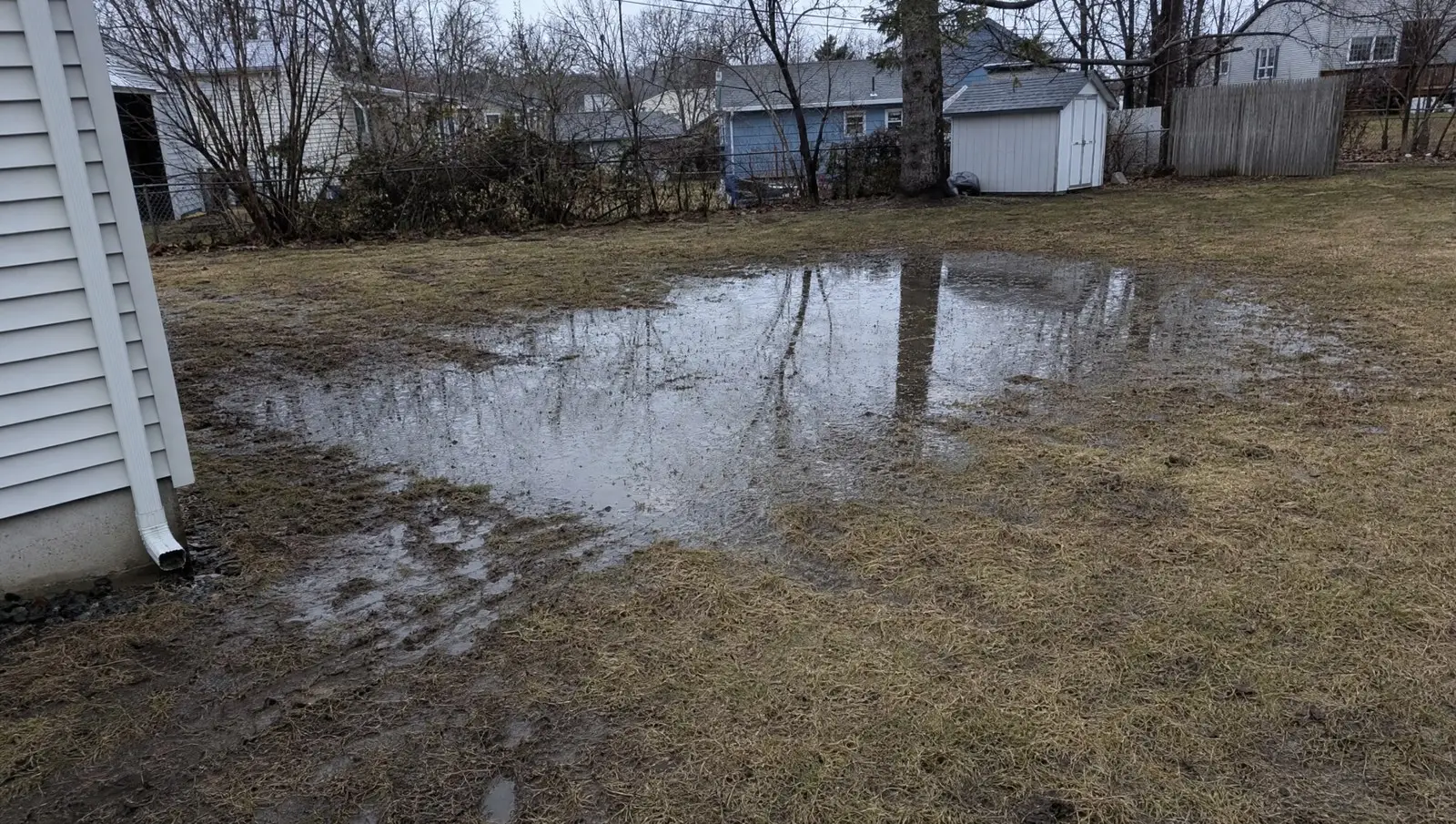
Yard drainage Connecticut homeowners deal with is not a mystery, it is a soil and slope problem, and once you see it that way the fix stops feeling like guesswork. If you have a corner of the yard that stays soggy three days after a storm, a basement wall that sweats every spring, or a patch of grass that dies out every July because the roots drowned in June, the ground under your feet is telling you exactly what is wrong.
Eastern Connecticut sits on some of the toughest soil in New England for water movement. Glacial till, dense clay pockets, ledge two feet down in half the towns from Groton to Colchester, and lots that were graded once when the house was built in 1978 and never touched again. Add the fact that storms here are heavier than they were twenty years ago, and you get the same call every spring: the yard is a sponge and nothing grows right.
Why so many Connecticut yards stay wet
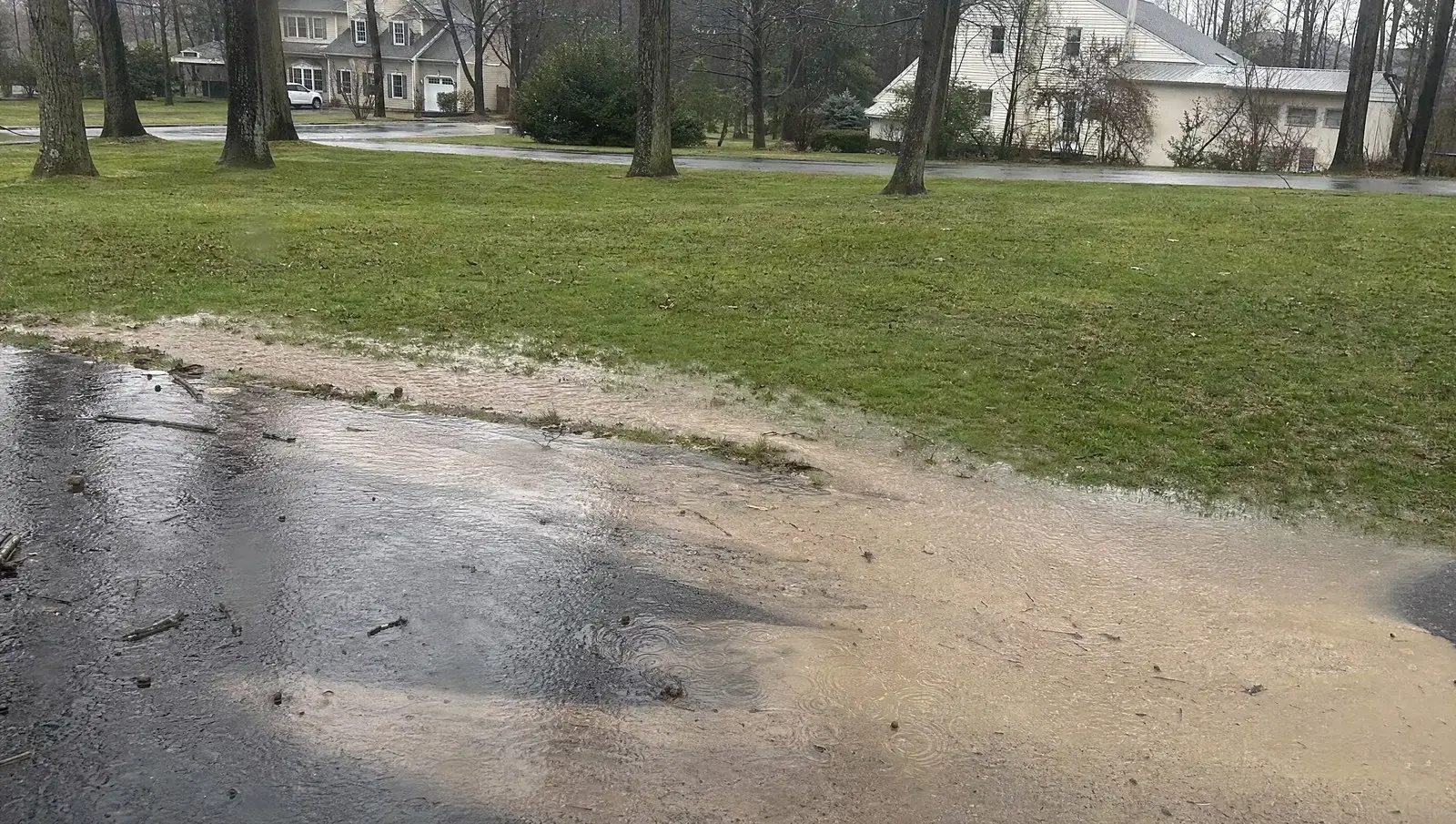
Water moves for two reasons: gravity and pressure. If your lawn is flat, or worse, sloped toward the house, gravity is working against you. If your soil is compacted clay or has a hardpan layer eighteen inches down, water hits that layer and stops. It has nowhere to go, so it pools on the surface or wicks sideways into your foundation.
The most common causes of standing water we see on properties across New London County are these:

- Negative grade around the foundation, meaning the ground slopes toward the house instead of away from it
- Downspouts that dump roof water two feet from the wall with no extension or drywell
- Compacted clay subsoil from construction equipment that was never broken up before topsoil went down
- Overgrown wooded edges where roots and leaf litter have built a dam along the low side of the yard
- Old French drains that silted up and stopped working ten years ago
- Septic fields or leach lines that raise the effective water table in a section of the lawn
You can have one of these problems or all six. On a bad lot we have seen five out of six on a single property. Guessing which one is driving your wet lawn is where people waste money. Digging a random trench and dropping in a pipe without reading the whole site is how you end up doing the job twice.
Diagnosis first, then a drainage plan
Before anyone puts a shovel in the ground, walk the property during or right after a heavy rain. That is when the yard tells the truth. Note where water sits, where it moves, and where it disappears. Then walk it again in a dry week and look at the grass. Yellow, thin, or moss-heavy patches almost always line up with the wet spots you saw during the storm.
A real yard drainage Connecticut plan pulls three things together: surface grading, subsurface drainage, and roof-water management. Skip one of them and the other two work harder than they should.
Surface grading and regrading
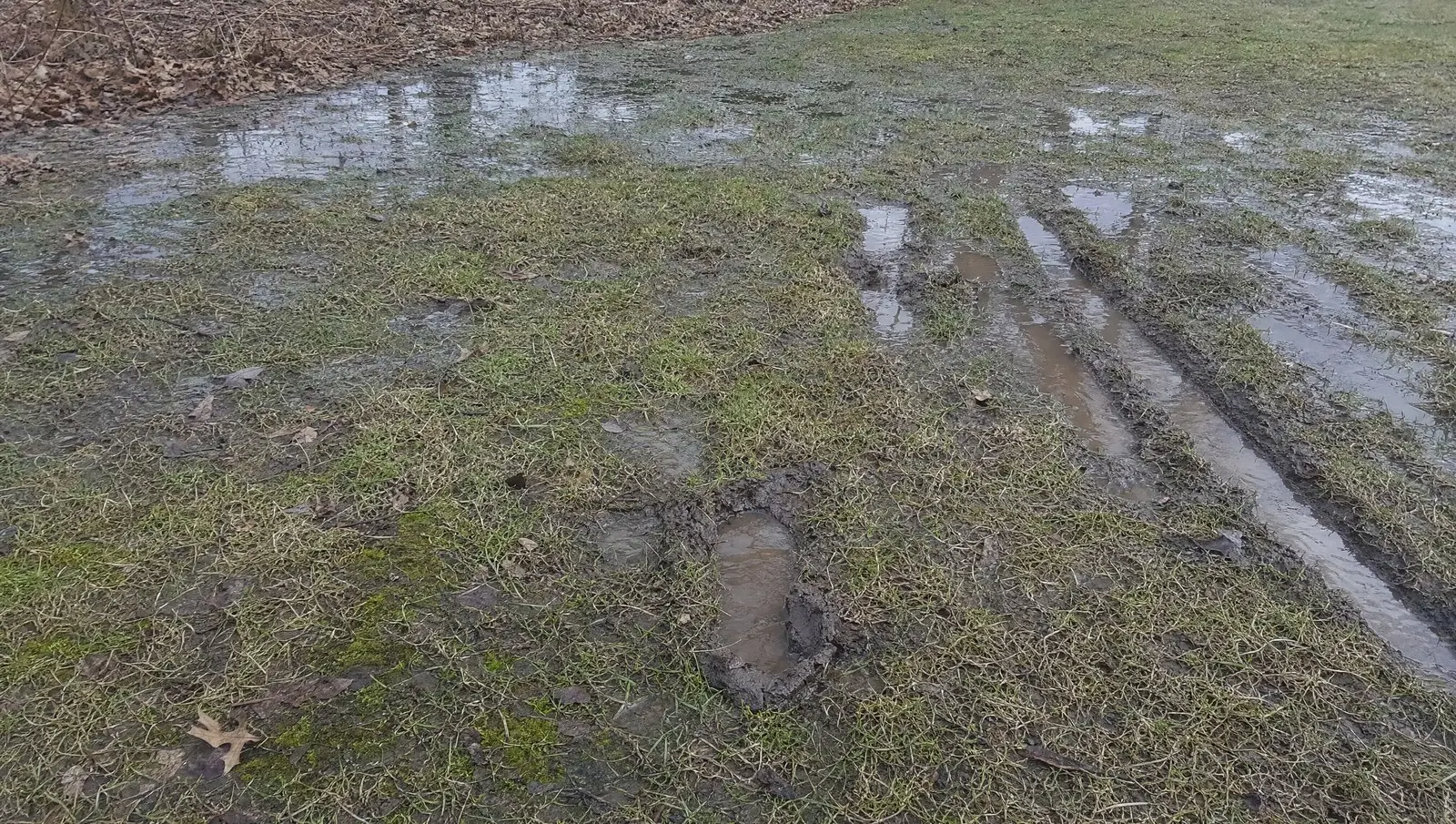
Regrading is exactly what it sounds like. We reshape the ground so water flows where you want it to go, which is away from the house, away from patios, and toward a natural low point, a drywell, or a daylight outlet. On a small backyard that might mean six inches of adjustment across twenty feet. On a full property regrade it might mean bringing in twenty yards of screened topsoil, cutting a swale along a property line, and re-seeding the whole lawn.
The rule of thumb is a minimum of six inches of fall in the first ten feet away from the foundation. A lot of Connecticut homes built in the 1960s and 1970s do not have that anymore because settling, mulch buildup, and thirty years of gardening have flattened the grade. Fix that one thing and half the wet-basement calls in this state would disappear.
Subsurface drainage
Once the surface is right, you look at what the water hits when it soaks in. French drains, curtain drains, and drywells all do the same job in different ways: they give underground water a controlled path out. A French drain along an uphill property line intercepts water before it reaches your lawn. A curtain drain around a foundation footing pulls water away from the wall. A drywell at the end of a downspout run gives roof water a place to soak in that is not against your foundation.
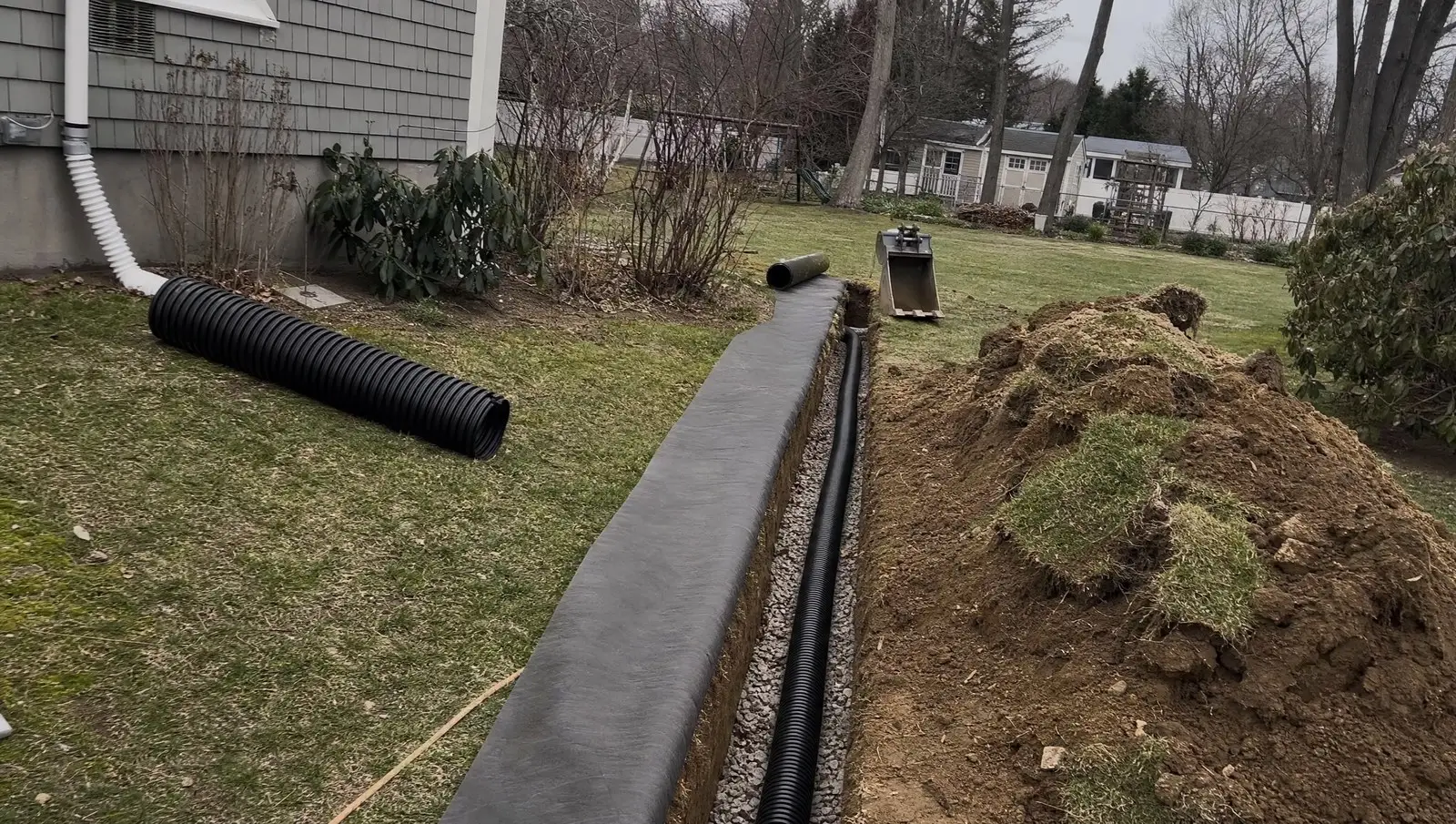
The mistake we see most often on repair jobs is drainage pipe wrapped in filter fabric buried in clay. The fabric silts up in three years, the pipe fills with sediment, and now you have an expensive underground planter. Done right, a subsurface drain uses washed stone, sock pipe only where soils justify it, and a cleanout at every turn so the system can be flushed for the next thirty years.
Roof-water management
A 2,000-square-foot roof dumps roughly 1,250 gallons of water in a one-inch rain. If your downspouts release that within a few feet of the wall, no amount of grading will keep the basement dry. Extending downspouts to daylight, tying them into a solid pipe run to a drywell, or connecting them to an existing storm system is often the single highest-return drainage move on a property, and it is usually the cheapest.
When land clearing is part of the answer
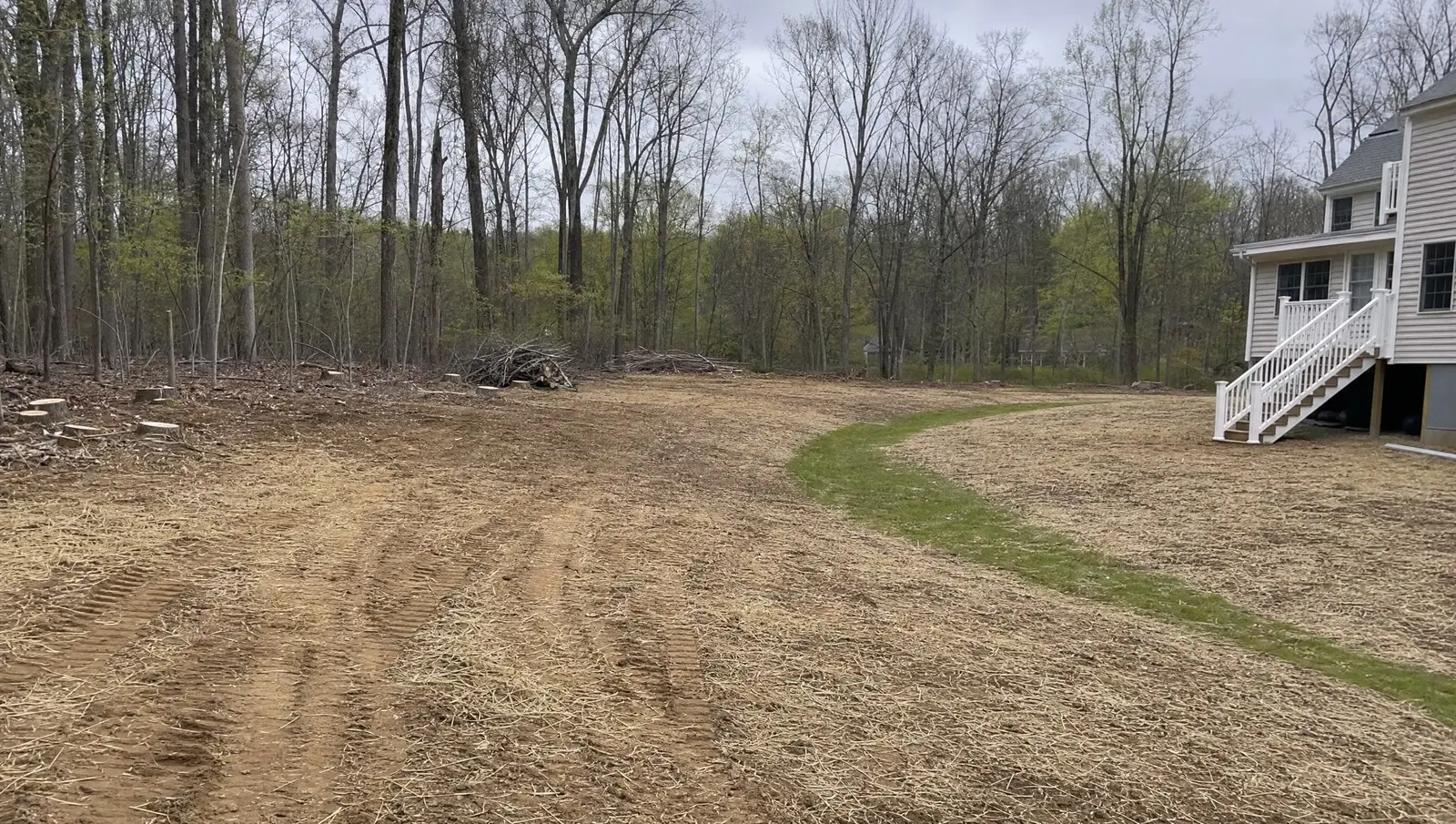
On wooded lots, especially the older properties out toward Ledyard, Preston, and Griswold, drainage problems and overgrown woods are often the same problem. A stand of scrub trees, invasive brush, and leaf-choked ground along the low edge of a yard acts as a dam. Water runs off the lawn, hits that mat of roots and organic material, and backs up.
Selective land clearing, brush hogging the understory, removing volunteer trees that were never planted, and re-establishing a proper edge, often unlocks drainage that a pipe alone cannot fix. It also gives you back usable yard. We have cleared quarter-acre sections that had not been mowable in fifteen years and turned them into dry, seeded lawn in a single season. If land clearing is on the table for your property, it should be planned in the same conversation as the drainage work, not as a separate project six months later. Our team handles both under one residential property management scope so the sequencing and the grading tie together.
What a drainage project actually looks like
A typical residential drainage build in eastern Connecticut runs like this:
- Site walk in wet and dry conditions, marked-up sketch of water paths and problem areas
- Utility markouts through Call Before You Dig
- Any needed selective clearing along the affected edges
- Excavation for swales, French drains, curtain drains, or drywells depending on the plan
- Regrading of the affected lawn areas with imported screened loam where needed
- Downspout extensions or tie-ins to the new drainage
- Seed and straw, or sod on high-priority areas, plus erosion control on any slopes
Timelines vary. A simple downspout-and-swale job can be done in two days. A full-property regrade with clearing and drainage can run one to two weeks depending on soil and weather. The Connecticut Department of Energy and Environmental Protection publishes helpful guidance on stormwater and site drainage that homeowners can review at portal.ct.gov/deep/water/stormwater if you want to understand the regulatory side, especially near wetlands.
How to know it is time to call
Call when any of these are true. You have water in the basement or crawl space after storms. You cannot mow a section of the yard because it is always too wet. Grass will not grow in one spot no matter what you plant. Mosquitoes are heavy in one corner every summer. A patio or walkway is settling because the base is saturated. A retaining wall is leaning. You are planning a new patio, pool, or addition and the site is soft.
Do not wait for the next hurricane. The best time to fix drainage in Connecticut is late spring through early fall, when the ground is workable and seed will actually germinate. Winter freeze-thaw makes everything worse and pushes projects into a longer, more expensive fix.
The one-vendor advantage
Drainage is where landscaping, hardscape, and site work all meet. If your contractor only does one of the three, you are going to get a partial fix. A drainage plan that ignores your patio settlement is going to have you tearing that patio up in two years. A regrading job that does not think about your snow storage in the winter is going to create a new problem the first February after it is done.
Handling grading, drainage, clearing, and finished landscape under one roof is how you get a yard that works in June and in February. If you are researching this problem for the first time, our blog has additional articles on outdoor living, lawn care, and site work that connect back to how drainage decisions ripple through the rest of the property.
Standing water is not something you learn to live with. It is a solvable problem, and on most Connecticut properties it can be solved in one season with the right plan. Walk your yard the next time it rains. Write down what you see. Then get a professional out there while the ground still remembers where the water went.