
Every spring somebody in Mystic looks at a hedge that was fine in November and is now brown on one side, and concludes it did not survive the winter. Usually the cold had very little to do with it. What killed it came off the water. Choosing salt tolerant plants for Mystic CT is the difference between a bed you replant every third year and one you stop thinking about.
Salt reaches plants two ways here, and they do different damage. Airborne spray gets picked up off Fishers Island Sound and the river in a strong onshore blow and carried well inland, which is why you can be three streets back from the water and still see it. Road salt is the second route, splashed or shovelled onto whatever is nearest the pavement. The tell is the same either way: browning concentrated on the side facing the wind or the road, and the lower part of the plant worst where snow was piled.
Why it browns off, and why it shows up in March
Salt spray sits on foliage and pulls moisture back out of the leaf. On an evergreen that is doing it through a whole winter while the ground is frozen and the roots cannot replace what is lost. The plant is effectively drying out in the middle of a wet season. Damage is done in January and February but you do not see it until things start moving in March, which is why it reads as winter kill.
Soil salt is the slower problem. It builds up where meltwater drains and sits, it changes what the roots can take up, and on sandy shoreline ground it also washes through faster than it does inland. That is one of the few places where Mystic’s soil does you a favour.
Salt tolerant plants for Mystic CT that actually hold up
These are the plants that shrug it off. Not a wish list, just what stays alive on the seaward side of a property here.
Shrubs
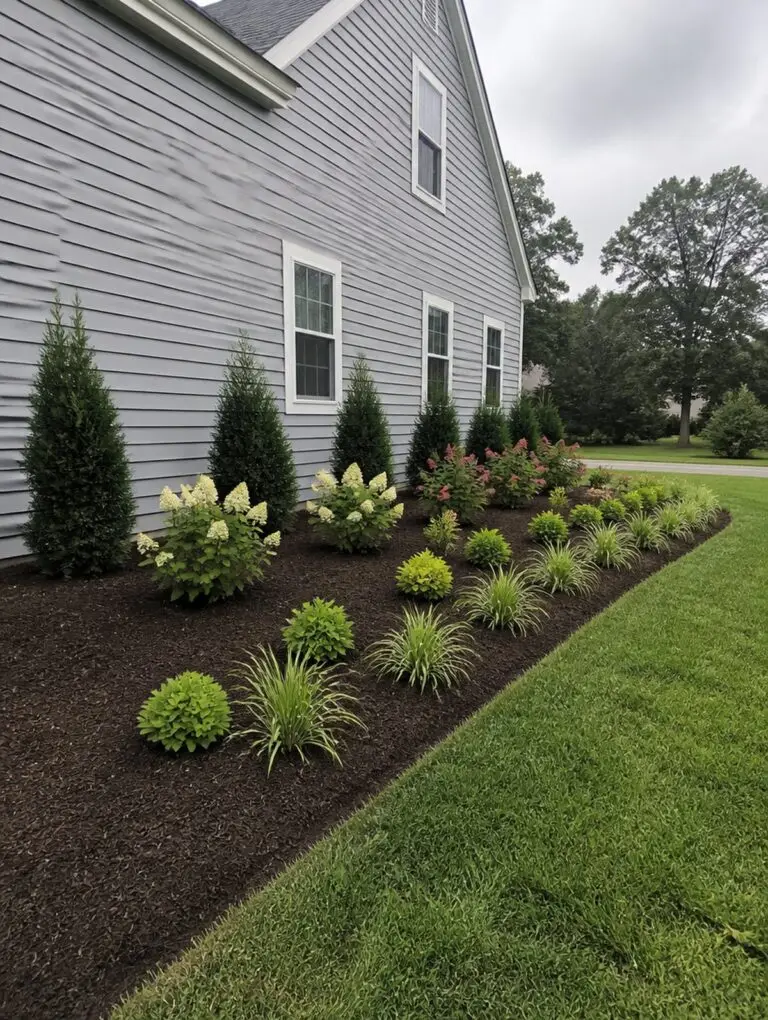
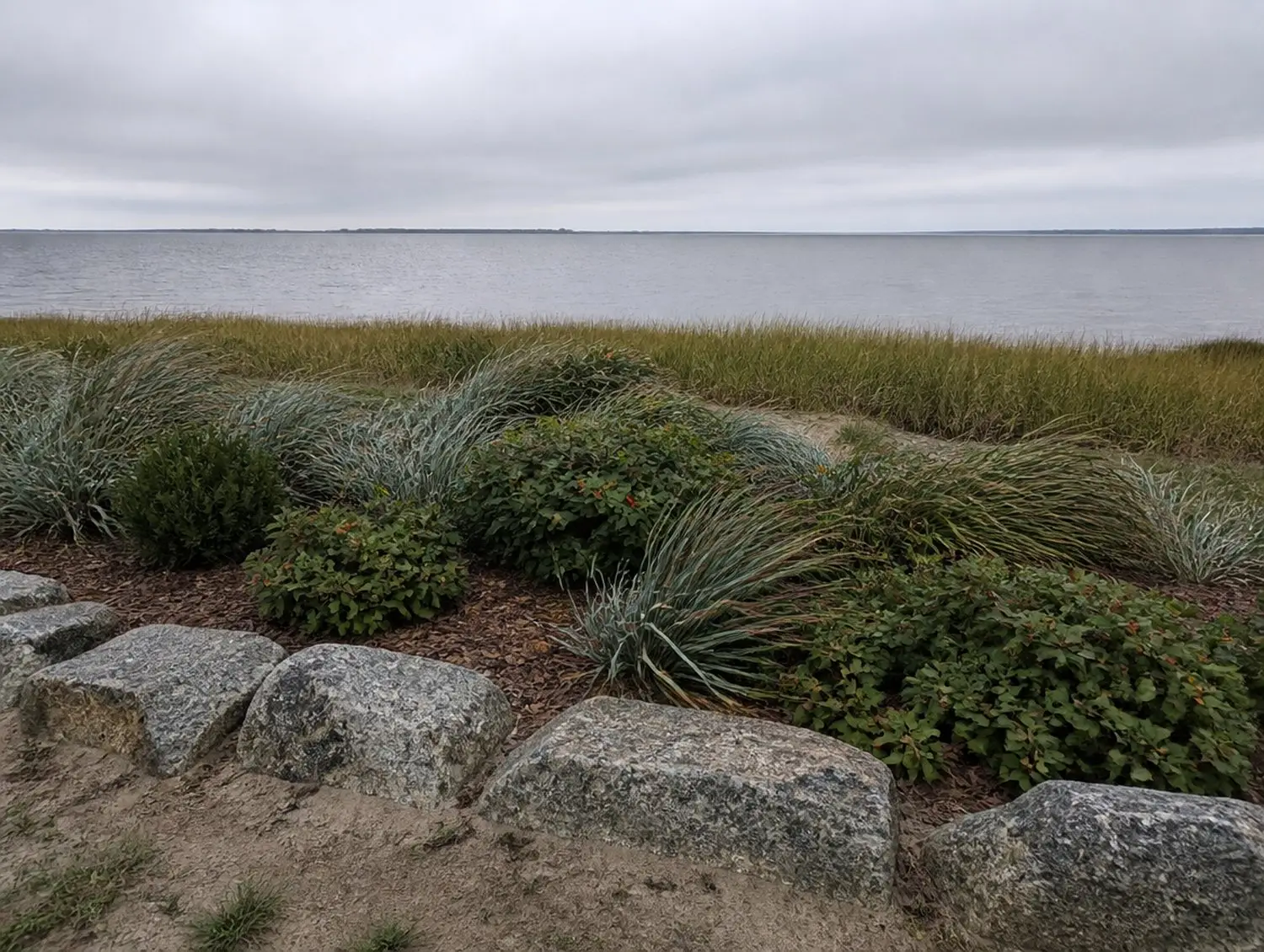
Guidance from UConn lines up with what we see on the ground here. Bayberry is the local benchmark and it earns it, semi-evergreen, tolerant of wind, sand and salt, and it looks like it belongs because it does. Rugosa rose takes direct spray and gives you hips through the autumn. Inkberry holds an evergreen structure without the burn arborvitae gets. Juniper, in the low spreading forms, handles exposure and poor soil at the same time.
Grasses and perennials
Switchgrass and little bluestem move in wind instead of fighting it and take salt without complaint. Beach grass belongs on the dune line rather than in a bed. Russian sage, catmint and daylily all cope well enough in a second-row bed with a little shelter.
What to stop planting on an exposed edge
Arborvitae is the big one. It goes in as a screen, takes salt from the road and spray from the water, and browns from the bottom up. Hemlock, boxwood and Japanese maple all struggle in a truly exposed position. None of them are bad plants. They are just the wrong ones for the seaward side of a Mystic lot, and they do fine two rows back.
Placement does more work than plant choice
The single most useful thing on an exposed property is a windward buffer. A row of bayberry or juniper on the water side takes the hit, and everything behind it lives a much easier life. On a small lot that might be four shrubs. It changes what you can grow in the rest of the garden entirely.
Second most useful: keep the fussy things away from where snow gets piled. Whatever is at the end of a driveway or beside a walk gets a winter of concentrated salt melt. That is a placement decision made in October, not a plant problem.
What to do the week after a storm
If you get a hard onshore blow and the ground is not frozen, rinse the foliage of anything valuable with fresh water. It is not a myth and it is not much work. You are washing the salt off the leaf before it has all winter to draw moisture out.
In spring, resist cutting damaged evergreens back straight away. A lot of what looks dead in March pushes new growth by May, and if you have already cut into it you have removed the part that would have recovered. Wait until growth starts, then take out what genuinely did not make it.
If a plant browns in the same spot every year, that is not bad luck. That is the wrong plant in that position, and replacing it with something from the list above is cheaper than replacing the same shrub every third season.
We plan plantings around this as a matter of course on exposed properties. If a bed on your property fails every winter in the same place, it is worth a look before you replant it again. See landscape plantings, or the whole picture on property care in Mystic.